International trade relies heavily on efficient transportation solutions, and sea freight remains one of the most cost-effective methods for moving goods across the globe. Whether you are an exporter shipping products from Pakistan to international markets or an importer sourcing goods from overseas suppliers, understanding the difference between FCL Shipping and LCL Shipping is essential.
Many businesses struggle to determine which shipping method best suits their cargo volume, budget, and delivery requirements. Choosing the wrong option can lead to unnecessary costs, delays, or even cargo damage.
In this comprehensive guide, we will explain the differences between FCL and LCL shipping, compare their advantages and disadvantages, and help you determine which option is best for your business.
What Is FCL Shipping?
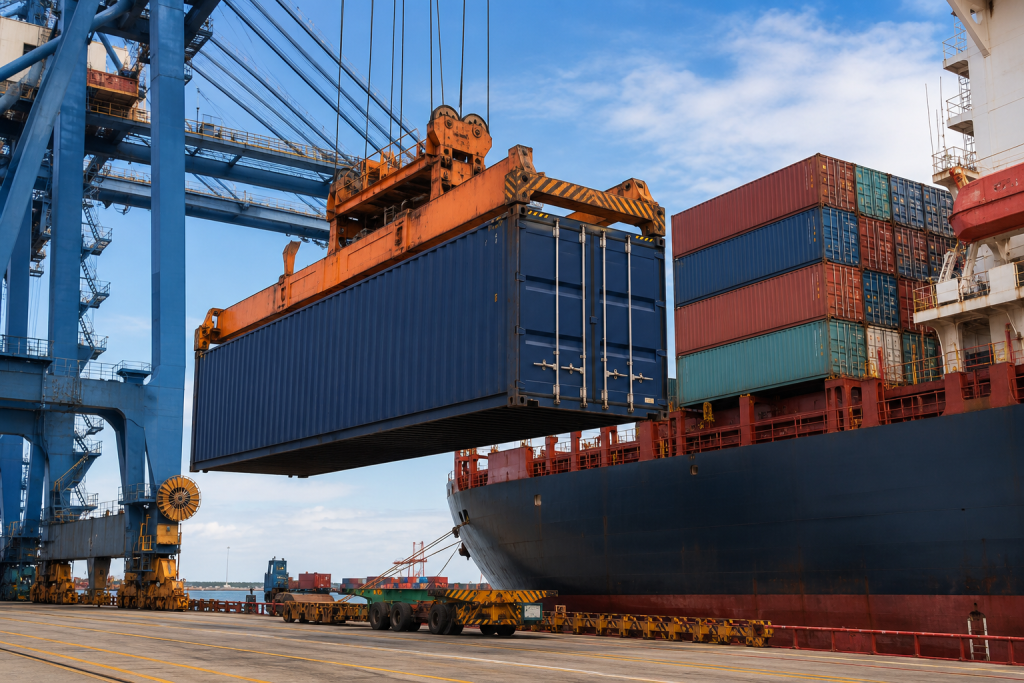
FCL (Full Container Load) Shipping refers to a shipment where an entire container is reserved for a single shipper. The container is used exclusively for one customer’s cargo, regardless of whether the container is completely filled.
Common container sizes include:
- 20-Foot Container
- 40-Foot Container
- 40-Foot High Cube Container
With FCL shipping, the cargo is loaded at the origin and remains sealed until it reaches the destination.
What Is LCL Shipping?
LCL (Less than Container Load) Shipping is a method where multiple shippers share space within the same container. Instead of booking an entire container, businesses only pay for the space their cargo occupies.
This option is ideal for small shipments that do not require a full container.
For example, if a business only has 3 cubic meters of cargo, booking an entire container would be expensive. Instead, the shipment can be consolidated with cargo from other businesses in an LCL container.
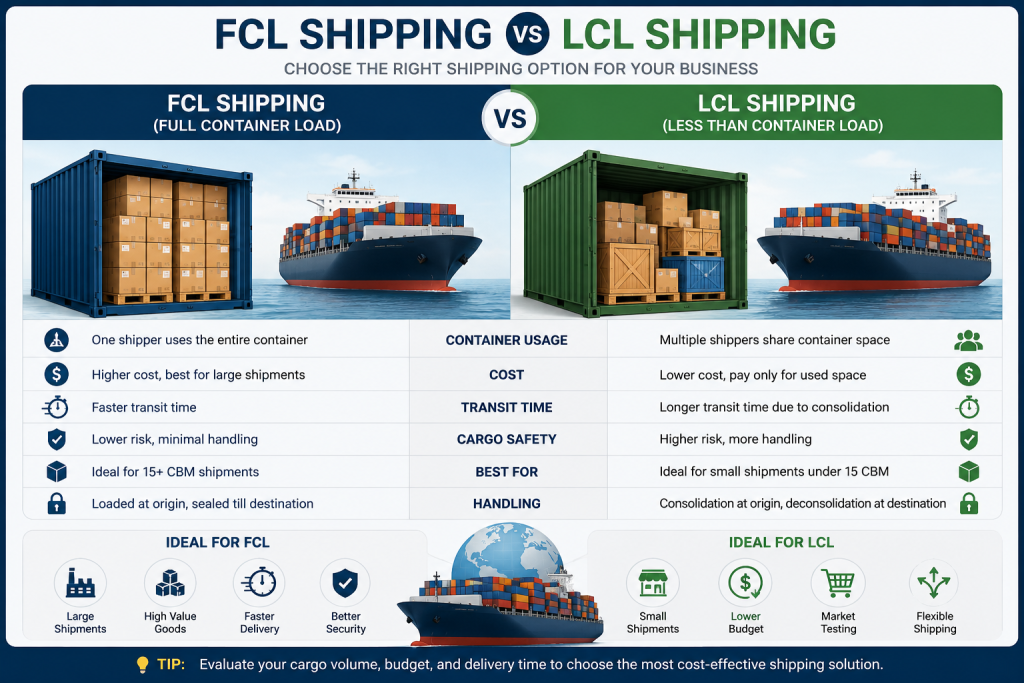
Understanding the Key Difference Between FCL and LCL Shipping
The primary difference between FCL and LCL shipping lies in how container space is utilized.
| Feature | FCL Shipping | LCL Shipping |
|---|---|---|
| Container Usage | Entire container for one shipper | Shared container |
| Cost Structure | Fixed container cost | Pay only for used space |
| Transit Time | Faster | Slower |
| Cargo Handling | Minimal | More handling |
| Risk of Damage | Lower | Higher |
| Best For | Large shipments | Small shipments |
Understanding these differences helps businesses make informed logistics decisions.
Advantages of FCL Shipping
1. Faster Transit Times
Since the container belongs to a single shipper, there is no need for cargo consolidation or deconsolidation.
The container moves directly from origin to destination, reducing handling and transit delays.
2. Enhanced Cargo Security
FCL shipments remain sealed throughout most of the transportation process. This significantly reduces the risk of theft, contamination, or accidental damage.
This makes FCL an excellent choice for:
- High-value products
- Fragile cargo
- Sensitive industrial equipment
3. Lower Risk of Damage
Because the cargo is not mixed with shipments from other businesses, there is less movement and handling during transportation.
The reduced handling helps protect goods throughout the shipping journey.
4. Better Cost Efficiency for Large Shipments
Although booking an entire container may appear expensive, FCL becomes highly economical when shipping large cargo volumes.
Businesses moving substantial quantities often achieve lower per-unit shipping costs through FCL.
Disadvantages of FCL Shipping
Higher Upfront Cost
If your shipment volume is small, paying for an entire container may not be financially practical.
Businesses with limited cargo quantities may end up paying for unused container space.
Inventory Requirements
Companies may need to accumulate sufficient inventory before shipping, which can increase storage costs and tie up working capital.
Advantages of LCL Shipping
1. Lower Shipping Costs for Small Shipments
One of the biggest benefits of LCL shipping is affordability.
Businesses only pay for the volume their cargo occupies, making it ideal for:
- Startups
- Small businesses
- Sample shipments
- Trial orders
2. Improved Cash Flow
LCL allows businesses to ship smaller quantities more frequently rather than waiting to fill an entire container.
This flexibility helps improve inventory management and cash flow.
3. Greater Supply Chain Flexibility
Businesses can respond more quickly to market demand by shipping smaller loads at regular intervals.
This is particularly useful for e-commerce companies and seasonal businesses.
4. Ideal for New Importers and Exporters
Companies entering international trade often start with smaller shipment volumes.
LCL shipping enables them to test overseas markets without making a large logistics investment.
Disadvantages of LCL Shipping
Longer Transit Times
LCL shipments require consolidation at origin and deconsolidation at destination.
This additional handling process can add several days to transit times.
Higher Risk of Damage
Since cargo from multiple businesses is loaded into the same container, goods may be exposed to increased handling.
Proper packaging becomes essential to minimize risk.
Potential Delays
A delay involving another shipper’s cargo can sometimes affect the entire consolidated shipment.
Customs inspections may also create additional delays.

When Should You Choose FCL Shipping?
FCL shipping is generally the better option when:
Your Cargo Volume Is Large
If your shipment occupies a significant portion of a container, booking the entire container often becomes more economical.
Cargo Security Is a Priority
Products that are fragile, expensive, or sensitive benefit from reduced handling and enhanced security.
Faster Delivery Is Required
FCL shipping usually offers shorter transit times because there is no need for consolidation.
You Need Better Control
Businesses with strict supply chain requirements often prefer the predictability of FCL shipments.
When Should You Choose LCL Shipping?
LCL shipping is typically the best choice when:
Shipment Volume Is Small
If your cargo does not justify a full container, LCL provides significant cost savings.
Budget Is Limited
Small businesses can access international shipping without the expense of booking a complete container.
Market Testing Is Underway
LCL is ideal for businesses launching new products or entering new export markets.
Inventory Needs Are Flexible
Companies can ship smaller quantities more frequently instead of waiting to fill a container.
Cost Comparison: FCL vs LCL Shipping
The cost difference between FCL and LCL depends on several factors:
- Shipment volume
- Container availability
- Port charges
- Destination country
- Fuel surcharges
- Seasonal demand
As a general rule:
- Small shipments = LCL is usually cheaper.
- Large shipments = FCL is usually more cost-effective.
Many freight forwarders recommend evaluating costs once cargo volume reaches approximately 15 cubic meters or more, as FCL may become financially advantageous.
Factors to Consider Before Choosing Between FCL and LCL
Before selecting a shipping method, consider the following:
Cargo Volume
The amount of cargo being shipped is the most important factor.
Delivery Timeline
Urgent shipments often benefit from FCL due to reduced transit times.
Budget
LCL offers lower initial costs, while FCL provides better value for larger shipments.
Cargo Sensitivity
Fragile or high-value cargo generally performs better under FCL conditions.
Supply Chain Strategy
Businesses should align shipping decisions with inventory management and customer expectations.
How Freight Forwarders Help Optimize Shipping Decisions
An experienced freight forwarder can evaluate:
- Cargo dimensions
- Shipping schedules
- Budget constraints
- Destination requirements
- Customs regulations
They can recommend whether FCL or LCL is the most efficient solution for a particular shipment.
At Qaas Freight System, we help importers and exporters identify the most cost-effective shipping option while ensuring smooth cargo movement across international markets.
Conclusion
The debate between FCL Shipping vs LCL Shipping ultimately depends on your cargo volume, budget, delivery timeline, and business objectives.
FCL shipping provides greater security, faster transit times, and lower per-unit costs for large shipments. LCL shipping offers flexibility and affordability for smaller cargo volumes, making it ideal for startups and businesses entering international markets.
Understanding the strengths and limitations of both methods allows businesses to make informed logistics decisions that improve efficiency and reduce shipping costs.
Whether you are shipping products from Pakistan to the USA, Europe, Australia, or any other international destination, selecting the right container solution can significantly impact your supply chain performance.
Partnering with an experienced logistics provider ensures that your cargo reaches its destination safely, efficiently, and cost-effectively.
Frequently Asked Questions
What does FCL stand for in shipping?
FCL stands for Full Container Load, where one shipper uses an entire container for their cargo.
What does LCL stand for in shipping?
LCL stands for Less than Container Load, where multiple shippers share space within the same container.
Is FCL cheaper than LCL?
For large shipments, FCL is often more cost-effective. For smaller shipments, LCL is generally cheaper.
Which shipping method is faster?
FCL shipping is usually faster because it does not require consolidation and deconsolidation processes.
Which shipping method is safer?
FCL offers greater cargo security since the container remains sealed and is handled less frequently.