International trade depends on clear agreements between buyers and sellers. One of the most important aspects of global commerce is determining who is responsible for transportation costs, insurance, customs procedures, and shipping risks. This is where Incoterms play a critical role.
Among the most widely used Incoterms in international shipping are FOB (Free on Board) and CIF (Cost, Insurance, and Freight). Whether you are an importer purchasing goods from overseas suppliers or an exporter selling products to international buyers, understanding the difference between FOB and CIF can save money, reduce disputes, and improve supply chain efficiency.
At Qaas Freight System, we help businesses across Pakistan and worldwide manage international shipments through reliable freight forwarding, customs clearance, and logistics solutions. One of the most common questions we receive from importers and exporters is:
“Should I choose FOB or CIF?”
The answer depends on your shipping experience, budget, risk tolerance, and logistics requirements.
In this comprehensive guide, we’ll explain FOB vs CIF in simple terms, compare their costs and responsibilities, discuss their advantages and disadvantages, and help you determine which option is best for your business.
What Are Incoterms?
Before comparing FOB and CIF, it’s important to understand what Incoterms are.
Incoterms, short for International Commercial Terms, are globally recognized trade rules developed by the International Chamber of Commerce (ICC). They define the obligations of buyers and sellers during international trade transactions.
Incoterms clarify:
- Who arranges transportation
- Who pays freight charges
- Who purchases insurance
- Who handles customs clearance
- When ownership risk transfers
- Which party is responsible at each stage of shipping
Without Incoterms, misunderstandings and disputes can occur frequently during international transactions.
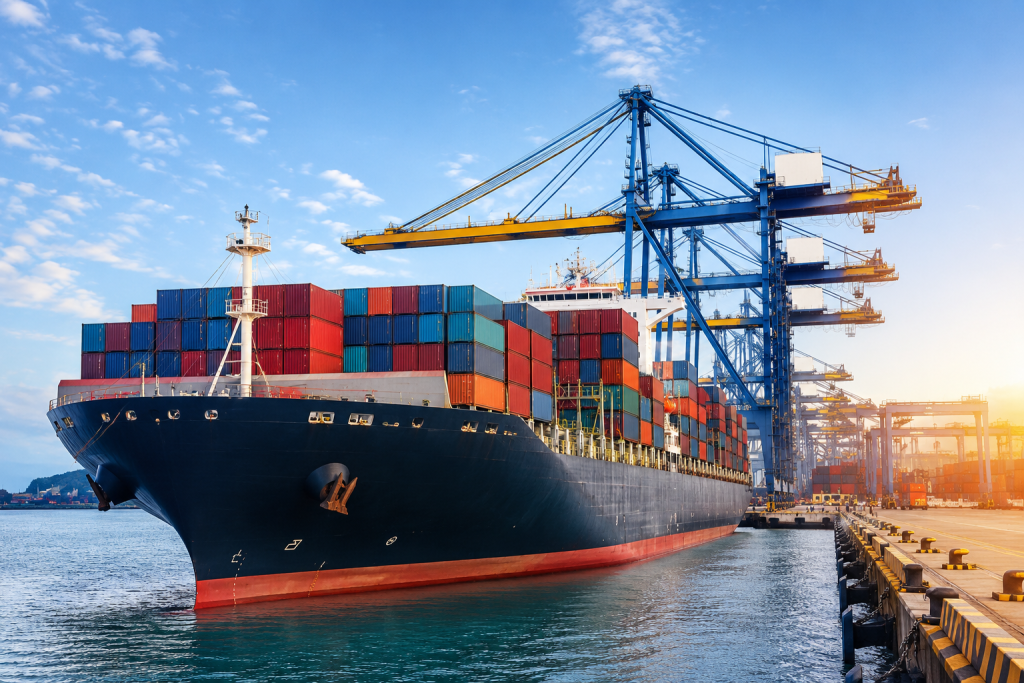
What Is FOB (Free on Board)?
FOB stands for Free on Board.
Under FOB shipping terms, the seller is responsible for delivering goods to the designated port and loading them onto the vessel selected by the buyer.
Once the cargo is successfully loaded onboard the vessel, responsibility and risk transfer from the seller to the buyer.
This means the buyer becomes responsible for freight costs, insurance, destination charges, customs clearance, and inland delivery after the goods are loaded onto the ship.
Seller Responsibilities Under FOB
The seller must:
- Produce or prepare the goods
- Package cargo appropriately
- Transport goods to the origin port
- Complete export customs clearance
- Handle export documentation
- Pay origin terminal charges
- Load cargo onto the vessel
Buyer Responsibilities Under FOB
The buyer must:
- Book ocean freight
- Arrange cargo insurance
- Pay ocean freight charges
- Handle destination charges
- Complete import customs clearance
- Pay customs duties and taxes
- Arrange final delivery
Example of FOB Shipping
Suppose a sports goods manufacturer in Sialkot exports products to a buyer in the United States under FOB Karachi terms.
The exporter transports the goods to Karachi Port and loads them onto the vessel.
Once the cargo crosses the ship’s rail and is loaded onboard, risk transfers to the American buyer. The buyer then pays for freight, insurance, destination charges, customs duties, and inland transportation.
Advantages of FOB Shipping
Better Cost Control
Buyers can negotiate freight rates directly with freight forwarders and shipping lines.
Greater Transparency
Importers know exactly how much they’re paying for transportation.
More Flexibility
Buyers can select preferred carriers, routes, and transit schedules.
Stronger Logistics Management
Experienced importers often achieve lower shipping costs through FOB arrangements.
Reduced Seller Responsibility
Exporters complete their obligations once the shipment is loaded onto the vessel.
Disadvantages of FOB Shipping
More Responsibility for Buyers
Importers must coordinate transportation and insurance independently.
Requires Logistics Knowledge
FOB is generally better suited for businesses familiar with international shipping procedures.
Risk Transfers Earlier
The buyer assumes cargo risk immediately after loading.

What Is CIF (Cost, Insurance, and Freight)?
CIF stands for Cost, Insurance, and Freight.
Under CIF terms, the seller takes additional responsibility by arranging and paying for freight transportation and cargo insurance.
The seller delivers the goods to the destination port while covering freight and insurance expenses.
However, one important detail is often misunderstood:
Although the seller pays freight and insurance costs, risk still transfers to the buyer once the cargo is loaded onboard the vessel.
Many importers mistakenly believe the seller bears all risks until arrival at the destination port, which is incorrect.
Seller Responsibilities Under CIF
The seller must:
- Prepare and package goods
- Arrange inland transportation
- Complete export customs procedures
- Book ocean freight
- Pay freight charges
- Purchase cargo insurance
- Provide shipping documentation
Buyer Responsibilities Under CIF
The buyer must:
- Complete import customs clearance
- Pay customs duties and taxes
- Handle destination charges
- Arrange final delivery
Example of CIF Shipping
A textile exporter in Pakistan sells products to a customer in Germany under CIF Hamburg terms.
The exporter pays for transportation from Pakistan to Hamburg and purchases cargo insurance.
The German buyer receives the shipment at Hamburg Port and becomes responsible for customs clearance, duties, and inland transportation.
Advantages of CIF Shipping
Simpler Process
The seller manages transportation arrangements.
Ideal for New Importers
Businesses with limited logistics experience benefit from seller-managed shipping.
Insurance Included
Cargo insurance is arranged by the seller.
Reduced Administrative Work
Importers have fewer transportation-related tasks.
Easier Budget Planning
Freight and insurance are included in the purchase price.
Disadvantages of CIF Shipping
Less Shipping Control
The buyer cannot always choose the carrier or routing.
Potentially Higher Costs
Sellers may include profit margins on freight charges.
Limited Insurance Coverage
Minimum insurance coverage may not protect against every risk.
Lower Visibility
Importers may have less information about shipping decisions and freight costs.
FOB vs CIF: Side-by-Side Comparison
| Feature | FOB | CIF |
|---|---|---|
| Freight Paid By | Buyer | Seller |
| Insurance Paid By | Buyer | Seller |
| Shipping Control | Buyer | Seller |
| Freight Transparency | High | Moderate |
| Logistics Flexibility | High | Low |
| Suitable for Experienced Importers | Yes | Yes |
| Suitable for New Importers | Moderate | Excellent |
| Risk Transfer Point | Loading on Vessel | Loading on Vessel |
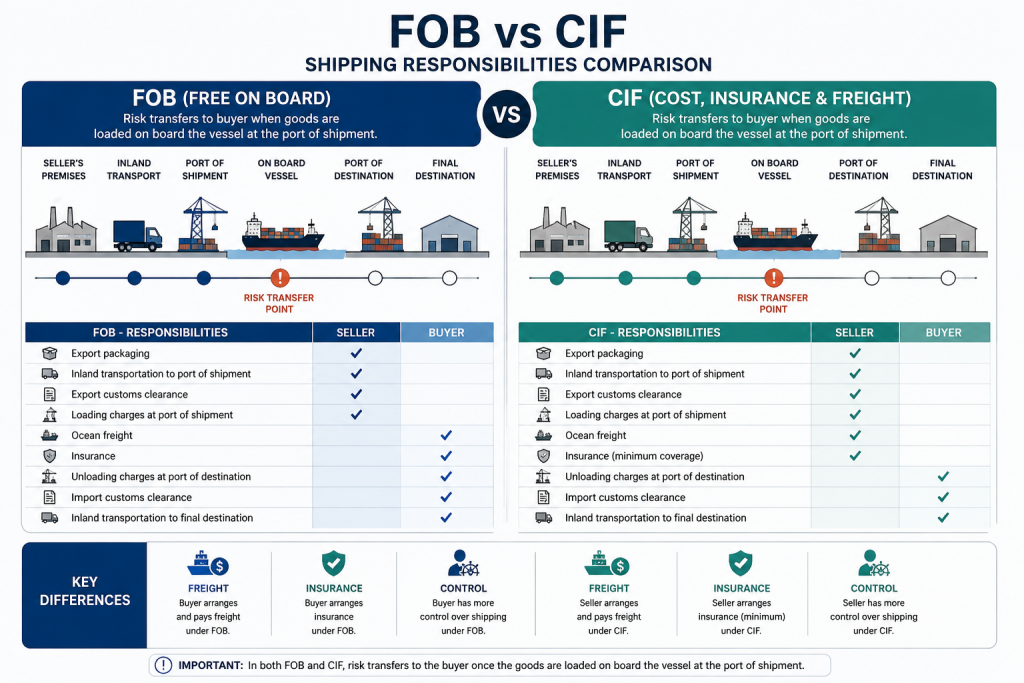
Understanding Risk Transfer in FOB and CIF
One of the most misunderstood areas of international trade is risk transfer.
Under both FOB and CIF:
Risk transfers when goods are loaded onto the vessel at the port of origin.
This means if cargo is damaged during ocean transit, the buyer technically bears the risk.
The difference is that under CIF, the seller has purchased insurance to provide financial protection.
This distinction is critical because many businesses assume CIF means the seller remains liable until delivery.
That assumption can result in costly disputes.
When Should You Choose FOB?
FOB is generally the better choice when:
- You have experience importing goods
- You want control over freight arrangements
- You have preferred freight forwarders
- You regularly import cargo
- You want competitive freight pricing
- You require greater shipment visibility
Large importers often prefer FOB because it offers flexibility and cost transparency.
When Should You Choose CIF?
CIF may be the better option when:
- You’re importing for the first time
- You don’t have a logistics department
- You want the supplier to manage transportation
- Your shipment volume is relatively small
- You prefer convenience over control
Many small businesses and startups choose CIF because it simplifies international purchasing.
Common Mistakes Businesses Make
Assuming CIF Means Risk-Free Shipping
Insurance does not eliminate risk. Coverage limitations should always be reviewed carefully.
Ignoring Destination Charges
Even under CIF, buyers still pay destination handling charges, customs duties, and inland transportation.
Choosing Based Only on Price
The cheapest quotation is not always the most cost-effective solution.
Failing to Verify Insurance
Always request a copy of the insurance certificate.
Not Working With a Freight Forwarder
Professional logistics support can significantly reduce delays and unexpected costs.
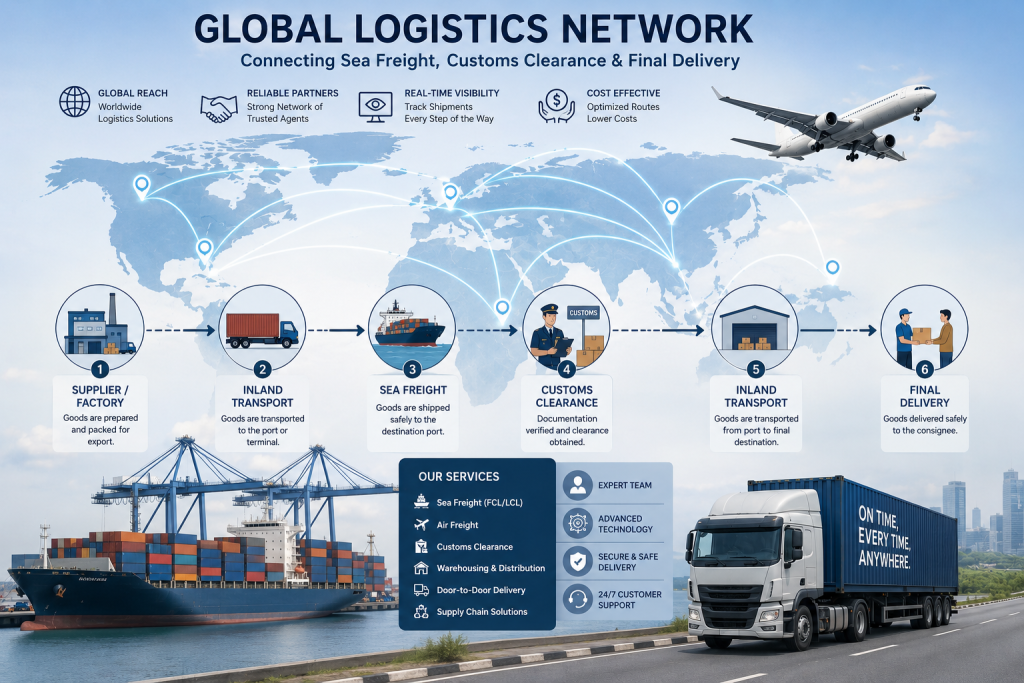
How Qaas Freight System Supports Importers and Exporters
Choosing between FOB and CIF can impact shipping costs, transit times, and supply chain performance.
At Qaas Freight System, we help businesses make informed logistics decisions through:
Air Freight Services
Fast and reliable transportation for urgent shipments.
Sea Freight Services
Cost-effective FCL and LCL shipping solutions worldwide.
Customs Clearance
Efficient handling of import and export procedures.
Freight Forwarding
End-to-end logistics coordination from origin to destination.
Cargo Insurance Support
Guidance on protecting valuable shipments.
Supply Chain Solutions
Customized logistics strategies for importers and exporters.
Whether your cargo moves under FOB, CIF, DDP, EXW, FCA, or other Incoterms, our experienced team ensures smooth shipment execution and compliance with international trade regulations.
Final Thoughts
Understanding FOB and CIF is essential for anyone involved in international trade.
FOB gives buyers greater control, transparency, and flexibility, making it a preferred choice for experienced importers and businesses with established logistics networks.
CIF simplifies the shipping process by allowing sellers to arrange freight and insurance, making it ideal for first-time importers and businesses seeking convenience.
Neither option is universally better. The right choice depends on your experience, logistics capabilities, shipment volume, and business goals.
If you’re looking for expert guidance on international shipping, customs clearance, freight forwarding, or Incoterms, Qaas Freight System is ready to help your business navigate global trade with confidence.
Contact Qaas Freight System today and discover smarter, more efficient logistics solutions for your international shipments.