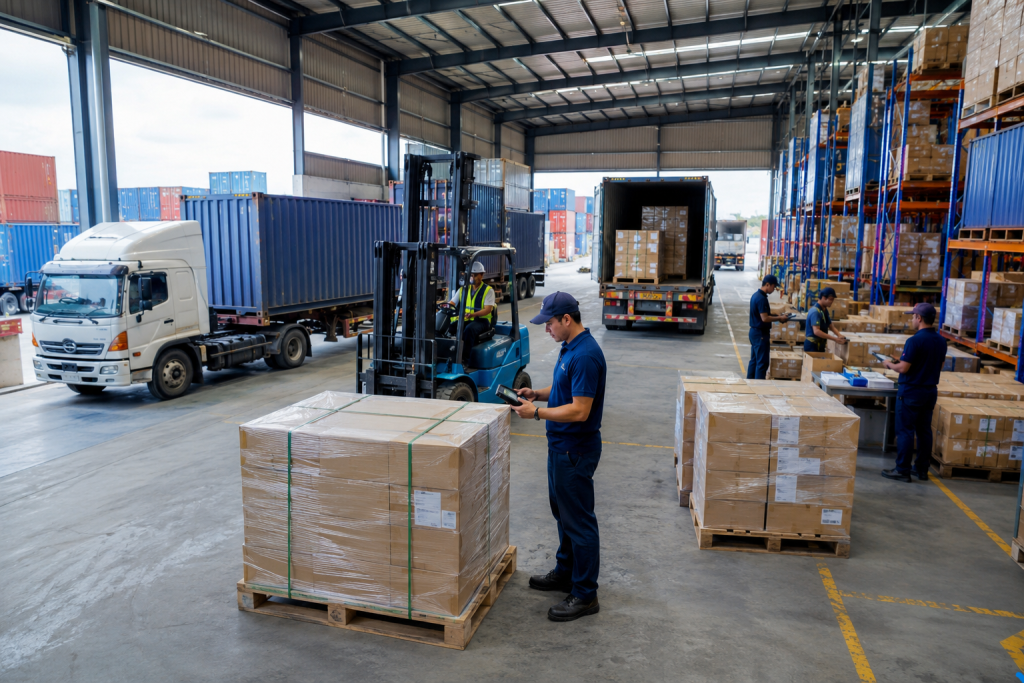
Freight Forwarding: The Backbone of Global Trade
International trade has become faster and more connected than ever before. Every day, millions of products travel between countries by air, sea, road, and rail. Behind nearly every successful international shipment is a freight forwarding company ensuring that cargo reaches its destination safely, efficiently, and on time.
Whether you’re a first-time exporter, an Amazon FBA seller, an eCommerce business, or a multinational manufacturer, understanding freight forwarding can help you reduce shipping costs, avoid customs delays, and streamline your supply chain.
At Qaas Freight System, we help businesses across Pakistan and around the world manage international logistics with reliable freight forwarding solutions tailored to their shipping needs.
What is Freight Forwarding?
Freight forwarding is the process of organizing and managing the transportation of goods from one location to another through one or multiple carriers.
A freight forwarder acts as an intermediary between the shipper and transportation providers.
Rather than owning ships or airplanes, freight forwarders coordinate every stage of the shipping process, including:
- Booking cargo space
- Planning shipping routes
- Preparing shipping documentation
- Customs clearance
- Cargo insurance
- Warehousing
- Cargo consolidation
- Final delivery
Their primary goal is to make international shipping simple, efficient, and cost-effective.
Why Freight Forwarding Matters
Without professional freight forwarding services, businesses may face:
- Customs delays
- Incorrect documentation
- Unexpected shipping costs
- Cargo damage
- Missed delivery deadlines
- Compliance issues
A reliable freight forwarder minimizes these risks while ensuring shipments move smoothly across international borders.
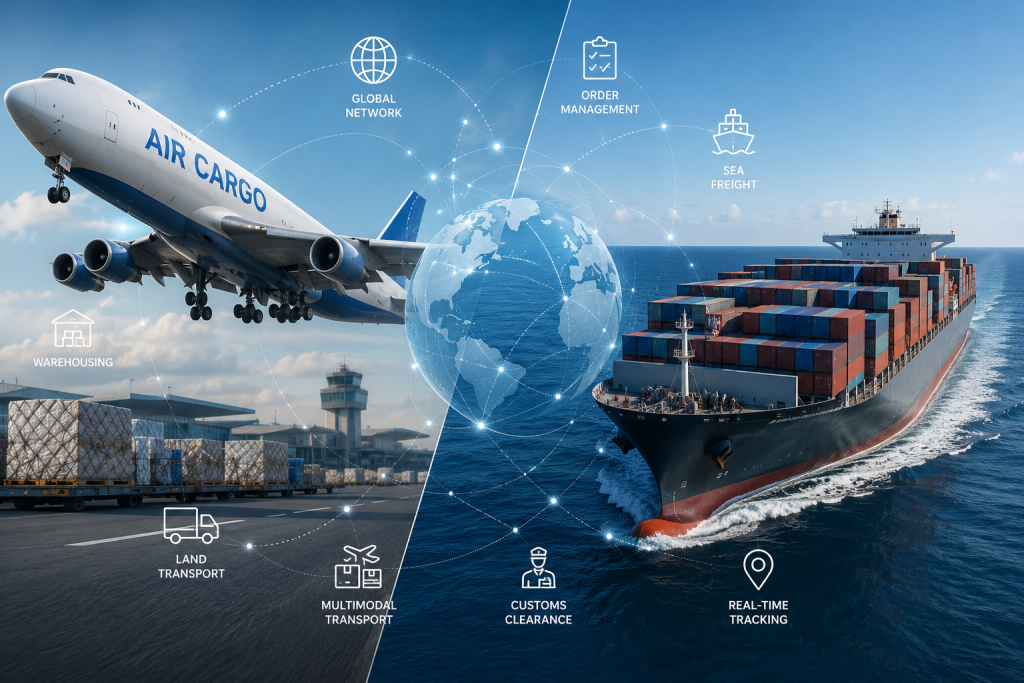
Types of Freight Forwarding
1. Air Freight
Air freight is the fastest shipping method available.
Ideal for:
- Urgent shipments
- High-value products
- Electronics
- Medical equipment
- Fashion products
- Amazon FBA inventory
Advantages
- Fast transit
- High security
- Reliable schedules
- Lower inventory costs
Disadvantages
- Higher shipping costs
- Weight limitations
2. Sea Freight
Sea freight is the most economical option for large shipments.
Ideal for:
- Furniture
- Machinery
- Textiles
- Sports goods
- Industrial equipment
Shipping Options
Full Container Load (FCL)
One customer uses the entire container.
Best for:
- Large cargo
- Better security
- Faster loading
Less than Container Load (LCL)
Multiple customers share one container.
Best for:
- Small shipments
- Lower transportation costs
3. Road Freight
Road transportation connects:
- Factories
- Warehouses
- Airports
- Seaports
- Distribution centers
It plays a vital role in domestic and cross-border logistics.
4. Rail Freight
Rail freight is commonly used for transporting heavy cargo across long distances and is particularly effective in regions with well-developed railway infrastructure.
How Freight Forwarding Works
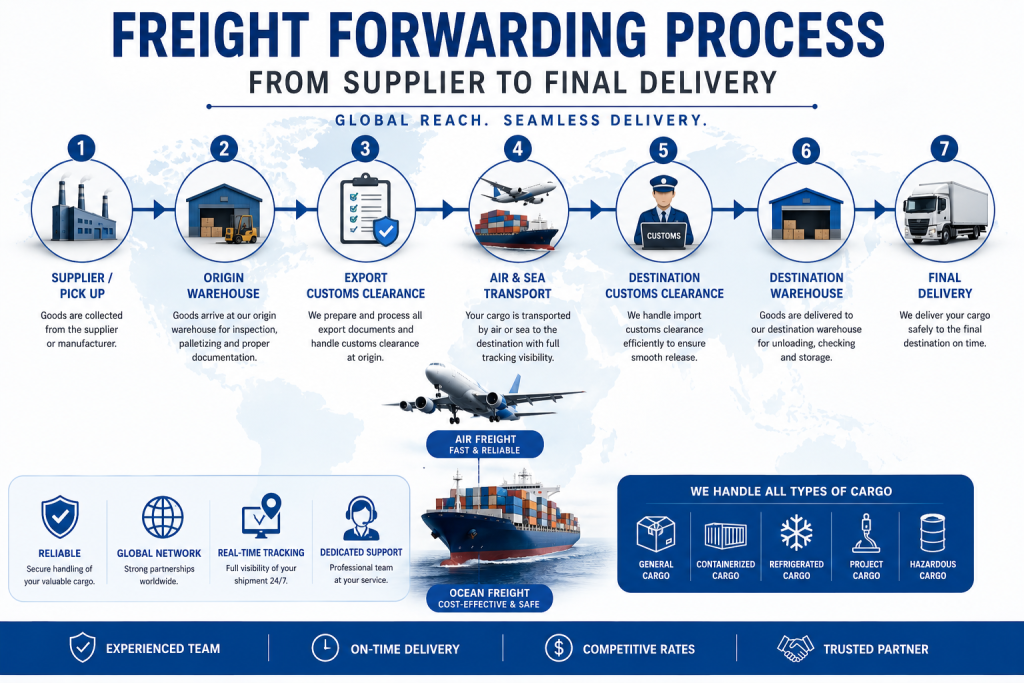
A freight forwarding process generally follows these steps:
Step 1: Shipment Booking
The shipper provides shipment details including:
- Dimensions
- Weight
- Destination
- Incoterms
- Cargo type
Step 2: Cargo Collection
Goods are collected from the supplier or factory.
Step 3: Warehouse Handling
Cargo is:
- Inspected
- Packed
- Labeled
- Consolidated (if needed)
Step 4: Export Customs Clearance
Necessary export documents are prepared and submitted to customs authorities.
Step 5: International Transportation
Cargo travels via:
- Air
- Sea
- Road
- Rail
Step 6: Import Customs Clearance
The destination country’s customs authorities verify documentation and duties before releasing the shipment.
Step 7: Final Delivery
The shipment reaches the customer’s warehouse, retail location, or fulfillment center.
Documents Required in Freight Forwarding
International shipping requires accurate documentation.
Common documents include:
- Commercial Invoice
- Packing List
- Bill of Lading (B/L)
- Air Waybill (AWB)
- Certificate of Origin
- Export Declaration
- Import License (where applicable)
- Insurance Certificate
- Letter of Credit documents
- Customs Forms
Incorrect documentation can result in customs delays, penalties, or shipment rejection.
Freight Forwarder vs Shipping Company
Many businesses confuse these two terms.
| Freight Forwarder | Shipping Company |
|---|---|
| Organizes shipments | Transports cargo |
| Works with multiple carriers | Owns vessels or aircraft |
| Handles customs | Focuses on transportation |
| Offers logistics planning | Limited logistics services |
| Provides end-to-end solutions | Provides transport only |
A freight forwarder coordinates the entire logistics journey rather than simply transporting goods.
Industries That Need Freight Forwarding
Freight forwarding supports nearly every industry, including:
- Textile & Apparel
- Sports Goods
- Surgical Instruments
- Leather Products
- Automotive Parts
- Electronics
- Agriculture
- Pharmaceutical Products
- Furniture
- Amazon FBA Sellers
- eCommerce Businesses
- Industrial Manufacturing
Benefits of Professional Freight Forwarding
1. Cost Savings
Freight forwarders negotiate better shipping rates because they ship large cargo volumes regularly.
2. Customs Expertise
Experienced logistics professionals ensure documentation complies with international regulations.
3. Faster Transit
Optimized shipping routes reduce transit times.
4. Shipment Tracking
Modern logistics systems provide real-time shipment visibility.
5. Cargo Insurance
Additional protection minimizes financial risk.
6. Warehousing
Temporary storage solutions improve supply chain flexibility.
7. Risk Management
Professional planning reduces delays and unexpected costs.
Factors Affecting Freight Costs
Several variables influence shipping costs.
These include:
- Cargo weight
- Cargo dimensions
- Destination country
- Shipping method
- Fuel prices
- Customs duties
- Seasonal demand
- Container availability
- Delivery speed
- Insurance
- Handling requirements
Understanding these factors helps businesses budget more accurately.

How to Choose the Right Freight Forwarder
Before selecting a logistics partner, consider the following:
Experience
Choose a company with proven international shipping expertise.
Global Network
A wide network of overseas agents ensures smoother deliveries.
Customs Knowledge
Compliance expertise prevents delays.
Customer Support
Responsive communication is essential throughout the shipping process.
Technology
Real-time shipment tracking improves visibility.
Flexible Shipping Solutions
Look for providers offering:
- Air Freight
- Sea Freight
- LCL
- FCL
- Customs Brokerage
- Warehousing
- Door-to-Door Delivery
Why Choose Qaas Freight System?
At Qaas Freight System, we understand that every shipment is unique. Our experienced logistics team provides customized freight forwarding solutions for businesses of all sizes, helping importers and exporters navigate global trade with confidence.
Our services include:
- Air Freight
- Sea Freight (FCL & LCL)
- Customs Clearance
- Door-to-Door Delivery
- Amazon FBA Logistics
- Cargo Consolidation
- Warehousing
- Import & Export Documentation
- Supply Chain Solutions
With a strong international network and a commitment to reliability, we help businesses reduce shipping costs, improve transit times, and ensure hassle-free deliveries across the globe.
Final Thoughts
Freight forwarding is much more than moving cargo from one country to another—it is the foundation of efficient global trade. By partnering with an experienced freight forwarder, businesses can simplify international shipping, reduce risks, and focus on growth instead of logistics challenges.
Whether you’re shipping a single pallet, a full container, or urgent air cargo, the right freight forwarding partner makes all the difference.
Qaas Freight System is committed to delivering dependable, cost-effective, and end-to-end logistics solutions that empower businesses to expand into global markets with confidence.
FAQ
What is freight forwarding?
Freight forwarding is the coordination and management of transporting goods internationally through air, sea, road, or rail, including customs clearance and documentation.
What does a freight forwarder do?
A freight forwarder arranges transportation, prepares shipping documents, manages customs procedures, coordinates carriers, and oversees the entire logistics process.
Which is cheaper: air freight or sea freight?
Sea freight is generally much cheaper for large or heavy shipments, while air freight is faster but more expensive.
Can freight forwarders handle customs clearance?
Yes. Most professional freight forwarders manage both export and import customs clearance to ensure compliance and reduce delays.
Why should I choose Qaas Freight System?
Qaas Freight System offers comprehensive freight forwarding services, including air and sea freight, customs brokerage, warehousing, cargo consolidation, and door-to-door delivery, helping businesses ship globally with confidence.